
Anúncios
Understanding Pregnancy Test Apps

Track Your Pregnancy Journey
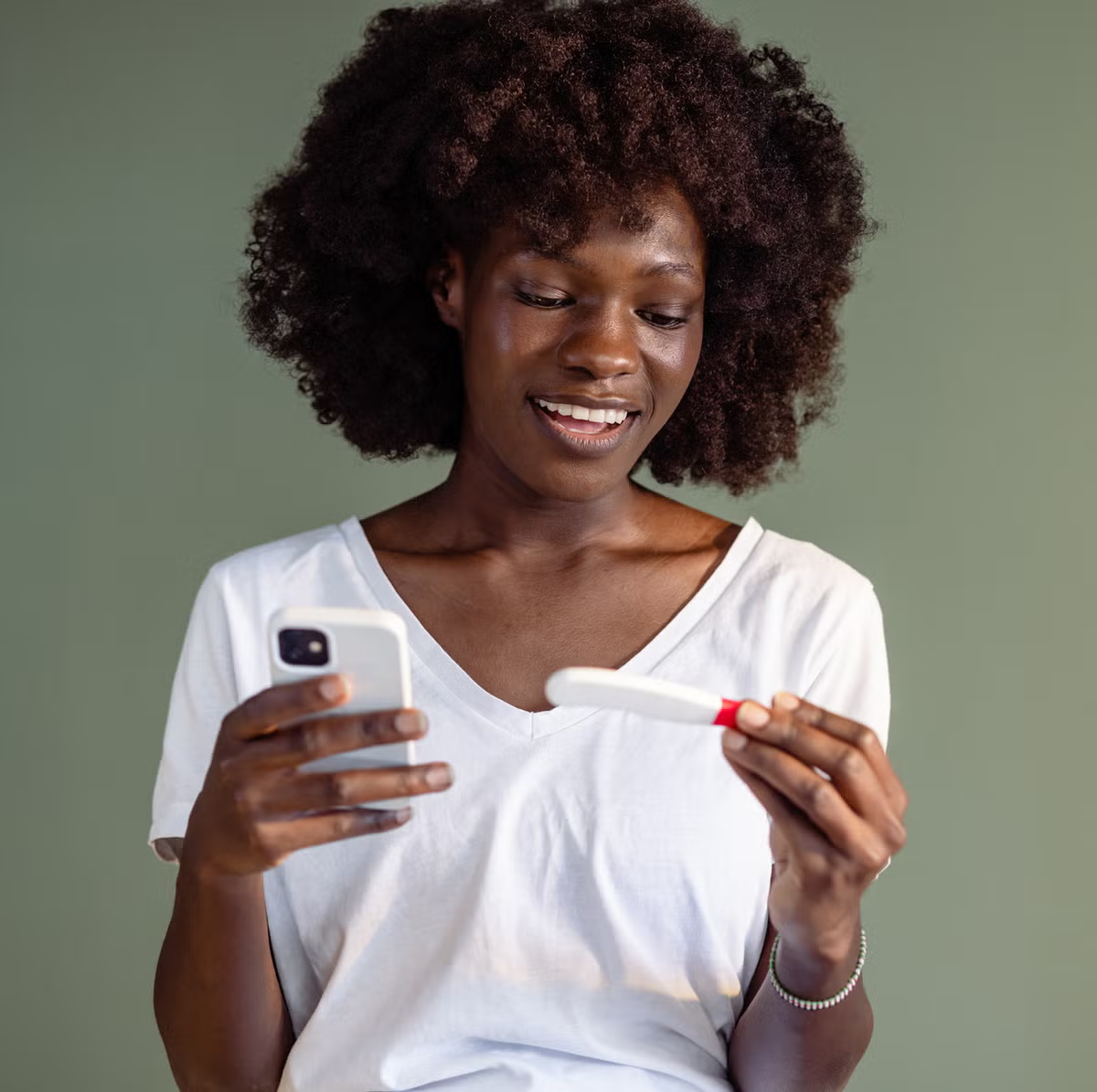
The journey toward motherhood begins with a single question: “Am I pregnant?” In today’s digital age, technology has transformed how women approach this life-changing moment. Pregnancy test apps have emerged as valuable companions, offering more than just a simple yes or no answer. These digital tools provide comprehensive support, tracking capabilities, and educational resources that empower women throughout their reproductive journey. 🌸
While traditional pregnancy tests remain the gold standard for confirmation, mobile applications have revolutionized the way women monitor their fertility, track symptoms, and understand their bodies. These apps combine science, user-friendly interfaces, and community support to create an ecosystem of care that extends far beyond the initial test result.
What Are Pregnancy Test Apps and How Do They Work?
Pregnancy test apps are sophisticated mobile applications designed to help women track their menstrual cycles, identify fertile windows, monitor pregnancy symptoms, and provide guidance throughout conception and early pregnancy. Unlike physical pregnancy tests that detect the hormone hCG in urine, these apps work by analyzing data you input about your cycle, symptoms, and bodily changes.
The technology behind these apps relies on algorithms that process your personal health information. By tracking factors like cycle length, basal body temperature, cervical mucus consistency, and physical symptoms, the apps can predict ovulation periods and potential pregnancy signs with increasing accuracy. Some advanced applications even integrate with wearable devices to collect real-time physiological data. 📱
It’s crucial to understand that these apps don’t replace actual pregnancy tests. Instead, they serve as complementary tools that help you understand when to take a physical test and what to expect during your journey. They bridge the gap between curiosity and confirmation, providing educational content and emotional support during what can be an anxious waiting period.
Key Features That Make These Apps Valuable
Modern pregnancy test apps come packed with features designed to support women at every stage. Cycle tracking forms the foundation, allowing you to log period dates, flow intensity, and duration. This historical data helps predict future cycles and identifies irregularities that might indicate pregnancy or other health concerns.
Symptom monitoring enables you to record various physical and emotional changes, from breast tenderness and nausea to mood swings and fatigue. The app analyzes these patterns and can alert you when symptoms align with early pregnancy indicators. Many apps include extensive symptom libraries with detailed descriptions to help you identify what you’re experiencing. ✨
Fertility windows and ovulation predictions represent another critical feature. By calculating your most fertile days based on your cycle data, these apps maximize your chances of conception if you’re actively trying to become pregnant. Some even provide reminders for optimal timing for intercourse or insemination.
The Science Behind Digital Pregnancy Tracking
Understanding the biological basis of pregnancy helps explain how apps can provide valuable insights. Pregnancy begins when a sperm fertilizes an egg, typically in the fallopian tube. The fertilized egg then travels to the uterus and implants in the uterine lining, usually 6-12 days after ovulation. This implantation triggers the production of hCG (human chorionic gonadotropin), the hormone detected by pregnancy tests.
Apps track the menstrual cycle, which typically lasts 28 days but can vary significantly between women. The cycle consists of several phases: menstruation, the follicular phase, ovulation, and the luteal phase. Ovulation usually occurs around day 14 in a 28-day cycle, releasing an egg that remains viable for 12-24 hours. Sperm, however, can survive in the reproductive tract for up to five days, creating a fertile window of approximately six days each cycle.
By consistently logging data, pregnancy apps learn your unique patterns. Machine learning algorithms adapt to your individual cycle characteristics, improving prediction accuracy over time. This personalized approach acknowledges that every woman’s body operates differently, moving beyond the one-size-fits-all calendar method. 🧬
Biological Markers Apps Help You Monitor
Beyond basic cycle tracking, sophisticated apps guide you in monitoring several biological markers that indicate fertility and potential pregnancy:
- Basal Body Temperature (BBT): Your resting body temperature slightly increases after ovulation due to progesterone. Tracking BBT can confirm ovulation has occurred and help identify pregnancy when temperatures remain elevated beyond the expected luteal phase.
- Cervical Mucus Changes: Throughout your cycle, cervical mucus consistency changes from dry to sticky to creamy to clear and stretchy (like egg whites) during peak fertility, then becomes thick again after ovulation.
- Cervical Position: The cervix changes position, firmness, and openness throughout the cycle. During fertile periods, it sits higher, feels softer, and opens slightly.
- Hormonal Fluctuations: Some apps integrate with hormone monitoring devices that measure estrogen and luteinizing hormone (LH) levels, providing additional data points for prediction accuracy.
Top Benefits of Using Pregnancy Test Apps
The advantages of incorporating these digital tools into your reproductive health routine extend far beyond simple convenience. First and foremost, they promote body literacy—helping you understand your unique cycle patterns, recognize what’s normal for you, and identify deviations that might warrant medical attention. This knowledge empowers you to have more informed conversations with healthcare providers. 💪
For couples trying to conceive, these apps optimize timing by identifying the most fertile days with precision. This targeted approach can reduce the time it takes to achieve pregnancy and alleviates some of the stress associated with conception efforts. Rather than guesswork, you have data-driven insights guiding your decisions.
The emotional support component shouldn’t be underestimated. Many apps include community forums where users share experiences, ask questions, and offer encouragement. During the two-week wait between ovulation and when you can reliably test for pregnancy, this community connection provides comfort and reduces feelings of isolation.
Educational Resources at Your Fingertips
Quality pregnancy apps serve as comprehensive educational platforms. They offer articles, videos, and expert advice on topics ranging from fertility optimization and conception tips to early pregnancy symptoms and prenatal care. This information helps demystify the reproductive process and prepares you for what lies ahead.
Many apps provide daily tips tailored to where you are in your cycle or pregnancy journey. If you’re in your fertile window, you might receive advice about cervical mucus observation. During the luteal phase, you’ll get information about implantation and early pregnancy signs. This personalized content delivery ensures you receive relevant information exactly when you need it. 📚
Choosing the Right Pregnancy Test App for Your Needs
The app marketplace offers dozens of pregnancy and fertility tracking options, each with different strengths and focus areas. When selecting an app, consider your primary goal. Are you actively trying to conceive, preventing pregnancy through fertility awareness, or simply wanting to understand your cycle better? Your objective should guide your choice.
Evaluate the user interface and ease of use. The best app is one you’ll actually use consistently, so it should feel intuitive and not burdensome. Look for clean designs, simple data entry methods, and clear visualizations of your cycle and predictions.
Privacy and data security deserve careful consideration. You’re entrusting these apps with intimate health information, so review their privacy policies. Understand what data they collect, how it’s stored, whether it’s shared with third parties, and what control you have over your information. Opt for apps with transparent practices and strong security measures. 🔒
Features to Prioritize
| Feature | Importance | What to Look For |
|---|---|---|
| Cycle Tracking | Essential | Easy period logging, historical data, irregular cycle support |
| Symptom Monitoring | High | Comprehensive symptom library, custom symptom options |
| Fertility Predictions | High | Multiple prediction methods, personalized algorithms |
| Partner Sharing | Medium | Secure sharing options, appropriate privacy controls |
| Community Support | Medium | Active forums, moderation, positive environment |
| Data Export | Medium | Ability to download your data, share with doctors |
| Integration Options | Low-Medium | Compatibility with wearables, health apps |
Understanding App Limitations and When to Take a Physical Test
While pregnancy apps offer tremendous value, it’s essential to recognize their limitations. These apps cannot definitively confirm pregnancy—only physical tests that detect hCG or blood tests performed by healthcare providers can do that. Apps provide educated predictions based on the data you input, but they’re not diagnostic tools.
The accuracy of app predictions depends heavily on data quality and consistency. If you forget to log symptoms, skip temperature readings, or have irregular cycles, predictions will be less reliable. Even with perfect data entry, individual biological variations mean predictions aren’t foolproof. Bodies don’t always follow textbook patterns. ⚠️
You should take a physical pregnancy test when you’ve missed your period or are experiencing pregnancy symptoms, typically around 14 days after ovulation. Testing earlier may result in false negatives since hCG levels might not be high enough for detection. Early detection tests can identify pregnancy sooner, but waiting until your missed period provides the most accurate results.
Recognizing Early Pregnancy Signs
Apps can help you identify potential early pregnancy symptoms, which typically appear 1-2 weeks after conception. Common early signs include:
- Missed period (the most obvious indicator)
- Breast tenderness and swelling
- Fatigue and exhaustion
- Nausea with or without vomiting (morning sickness)
- Increased urination frequency
- Mood swings and emotional sensitivity
- Food aversions or cravings
- Light spotting (implantation bleeding)
- Mild cramping
- Heightened sense of smell
However, many of these symptoms can also indicate premenstrual syndrome (PMS), making them unreliable for confirmation without a physical test. Apps help you track symptom patterns over time, potentially identifying differences between your typical PMS symptoms and potential pregnancy indicators. 🤰
Maximizing App Effectiveness Through Consistent Use
The power of pregnancy test apps lies in their ability to learn from your data over time. To maximize their effectiveness, commit to consistent daily logging. Set reminders to take your basal body temperature each morning at the same time before getting out of bed. Log your period as soon as it starts, noting flow intensity throughout its duration.
Record symptoms as you experience them rather than trying to remember everything at the end of the day. Most apps make this easy with quick-entry interfaces and customizable symptom lists. The more detailed your records, the more personalized and accurate the app’s predictions become.
Take time to explore all features your chosen app offers. Many users stick to basic period tracking without utilizing fertility predictions, partner sharing, or educational content. Diving deeper into the app’s capabilities ensures you’re getting full value from the tool. Consider watching tutorial videos or reading help documentation to discover features you might have overlooked. 🎯
Integrating Apps with Other Fertility Awareness Methods
For maximum insight, combine app tracking with other fertility awareness methods. Use ovulation predictor kits (OPKs) that detect the LH surge preceding ovulation, and log results in your app. This combination provides both hormonal confirmation and pattern-based prediction.
Consider checking your cervical mucus and position daily during your fertile window, recording observations in the app. These physical signs offer real-time fertility information that complements app predictions. Over several cycles, you’ll develop a comprehensive understanding of your body’s unique signals.
Privacy Considerations and Data Security
When using pregnancy test apps, you’re sharing highly personal information about your reproductive health, sexual activity, and potentially pregnancy status. This data requires protection, yet many popular apps have faced scrutiny over privacy practices. Before committing to an app, research its data handling policies thoroughly.
Read the privacy policy carefully, looking for specifics about data storage, encryption, sharing with advertisers or third parties, and data deletion procedures. Be wary of apps with vague policies or those requesting permissions unrelated to their core function. Your location data, for example, typically isn’t necessary for cycle tracking. 🔐
Consider the implications of data breaches or unauthorized access. Could this information be used to infer pregnancy status before you’re ready to share? Might it affect insurance decisions or employment situations? While these scenarios are rare, understanding the risks helps you make informed choices about which apps to trust with your data.
Protecting Your Privacy
Take proactive steps to protect your information when using pregnancy apps:
- Enable all available security features, including password protection and biometric locks
- Review app permissions regularly and disable any that seem unnecessary
- Opt out of data sharing with third parties whenever possible
- Use apps from reputable developers with transparent privacy practices
- Consider using a separate email address for fertility-related apps
- Regularly review connected accounts and revoke unnecessary access
- Delete your data and account if you stop using an app
Beyond the Initial Test: Apps as Long-Term Pregnancy Companions
Once pregnancy is confirmed, many apps transition into pregnancy tracking mode, offering week-by-week guidance throughout your journey. They provide information about fetal development, expected physical changes, nutrition advice, and preparation tips for labor and delivery. This continuity means you don’t need to switch platforms just because you’ve graduated from trying to conceive to expecting. 👶
Pregnancy tracking features typically include symptom logs for monitoring morning sickness, fatigue, and other pregnancy-related experiences. You can record prenatal appointments, test results, and measurements, creating a comprehensive pregnancy journal. Many apps offer contraction timers for labor, kick counters for monitoring fetal movement, and checklists for hospital bag packing and nursery preparation.
The community aspect becomes even more valuable during pregnancy, connecting you with others at similar stages. Sharing concerns, celebrating milestones, and learning from others’ experiences creates a support network that extends beyond your immediate circle. Many women form lasting friendships through these app communities.
Making Informed Decisions About Your Reproductive Health
Pregnancy test apps represent powerful tools for understanding and managing your reproductive health. They democratize access to information that was once available only through medical professionals or specialized training. This knowledge empowers you to advocate for yourself, ask informed questions, and make decisions aligned with your goals and values.
However, these apps work best as part of a comprehensive approach to reproductive health. They should complement, not replace, regular medical care. Share your app data with your healthcare provider, who can interpret patterns within the context of your overall health history and provide personalized guidance.
Remember that every woman’s journey is unique. What works for others may not work for you, and that’s perfectly normal. Apps provide general guidance based on common patterns, but your body may not conform to typical timelines or symptoms. Trust your intuition, listen to your body, and seek medical advice when something feels wrong, regardless of what an app predicts. 💗
When to Consult a Healthcare Provider
While apps offer valuable support, certain situations require professional medical attention. Contact your healthcare provider if you experience:
- Irregular cycles that suddenly change pattern
- Difficulty conceiving after 12 months of trying (6 months if over age 35)
- Severe abdominal pain or unusual bleeding
- Pregnancy test results that don’t match your symptoms or cycle
- Concerns about potential pregnancy complications
- Questions about medications or health conditions affecting fertility
Embracing Technology While Trusting Your Body
The rise of pregnancy test apps reflects broader trends toward personalized healthcare and patient empowerment. These tools give you unprecedented access to insights about your body’s rhythms and reproductive potential. They transform abstract biological processes into tangible data you can visualize, understand, and utilize.
Yet technology should enhance, not override, your connection with your body. The most effective approach combines app-based tracking with attentiveness to physical sensations and intuitive awareness. Apps provide structure and analysis, while your embodied experience offers irreplaceable information about what’s happening internally. Together, they create a comprehensive understanding that serves you throughout your reproductive journey. ✨
As you explore pregnancy test apps, approach them with realistic expectations and an appreciation for what they can and cannot do. They’re companions on your path, offering information, support, and encouragement. Whether you’re trying to conceive, preventing pregnancy, or simply curious about your cycle, these digital tools provide valuable resources that empower you to take charge of your reproductive health with confidence and knowledge.
